
Schools face a squeeze. More kids need classrooms. Old buildings need repairs. Electric bills are rising. School heads stretch budgets for student success. The answer isn’t always new construction. Sometimes it’s making current spaces pull their weight.
Beyond Traditional Classrooms
Walk through a school built fifty years ago. You’ll see the same layout everywhere. Boxy classrooms line both sides of a hallway. The gym anchors one end. Maybe there’s a library somewhere. This setup worked when teachers lectured and students sat in rows taking notes. Kids today learn by doing. They build robots in the morning and practice presentations after lunch. One minute they’re huddled around laptops coding. The next they’re spreading out art supplies across tables. Fixed classrooms can’t keep up.
Schools now knock down walls between rooms. Accordion dividers split big spaces or open small ones. Yesterday’s computer lab is today’s dance studio and tomorrow’s testing center. Furniture has wheels. Desks stack in corners when the floor becomes a stage. Even hallways turn into learning spaces with whiteboard walls and bench seating.
Technology Integration That Makes Sense
Nobody builds computer labs anymore. Why would they? Every student carries more computing power in their backpack than those old desktop rows ever provided. The challenge now is power and connectivity, not hardware. Outlets hide in floors and pop up from tables. USB ports are found in odd spots like stair railings and window sills. Wi-Fi signal remains stable everywhere, including the bathroom. The real magic is behind the scenes. Motion sensors know when rooms empty out. Lights dim. Heat drops. Ventilation slows. The building practically runs itself.
School safety became complicated. Doors need to lock fast but release faster if there’s a fire. Cameras should see trouble without feeling creepy. Visitor management has to be tight but welcoming. Modern systems handle these contradictions. A single dashboard shows everything. One person monitors it all from a tablet while walking the halls.
Sustainable Systems Save Money
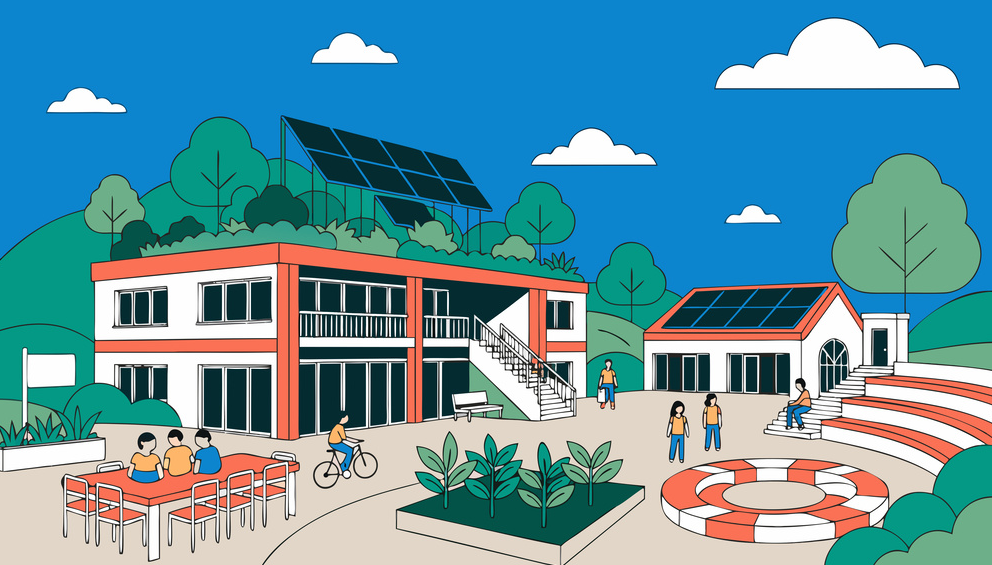
Utility bills eat huge chunks of school budgets. An old boiler burns cash all winter. Fluorescent tubes buzz through electricity. Leaky windows might as well be holes in the wall. Fixing these problems pays off fast. Firms like Commonwealth help schools harness renewable energy. They do so through solar arrays on rooftops and over parking lots. Add some battery storage to the equation and schools keep lights on even when the grid fails. Students watch real-time displays showing how much power the panels generate. Science class gets very real when kids calculate their school’s carbon footprint dropping month by month.
But sustainability goes beyond solar panels. Rainwater irrigates athletic fields. Composting systems turn cafeteria waste into garden soil. Fresh air flows through classrooms instead of recycled germs. Teachers take fewer sick days. Students concentrate better. Parents notice their kids come home healthier and happier.
See also: Solving the Mystery of [pii_email_59ea919492dfc2762030]: Tips from Tech Experts
Spaces That Teach
The building itself becomes a giant textbook. Pipes and ducts stay exposed on purpose, labeled for curious minds. A cutaway wall shows insulation and wiring. The roof garden demonstrates urban farming. Chemistry students test water from the collection pond. Physics classes measure solar panel angles. Wide stairs encourage walking over elevators. Large windows offer natural light and tree views. The cafeteria has an outdoor eating area. Choices shape behavior without rules or lectures.
Conclusion
Educational spaces must evolve or become obsolete. Rigid classrooms waste opportunities. Inefficient systems waste money. Poor design wastes potential. But buildings that adapt, conserve, and inspire give students advantages that last lifetimes. The investment makes sense on every level. Students learn better. Teachers teach easier. Communities get more value. School buildings shouldn’t just house education. They should enable it, enhance it, and embody it. That’s how educational spaces work harder for everyone.